Carpenter bees can cause serious damage to wooden structures, and even if it seems like they’ve disappeared one year, infestations often return the following spring without proper treatment.
While carpenter bees are often viewed as more of a nuisance than a threat, their ability to repeatedly burrow into wood can lead to long-term structural concerns if left unaddressed. Over time, this damage can weaken decks, fences, siding, and other wooden elements around your home.
If you are noticing carpenter bees in Kansas City this spring, here’s what you need to know about their behavior and how professional carpenter bee control from Advantage Termite and Pest Control can protect your home.
Why Carpenter Bee Activity Escalates in the Spring
Spring marks increased activity for many wood-destroying pests. Carpenter bees, like many of Kansas City’s most damaging pests, are most active when temperatures rise. Starting in February or March, female carpenter bees begin burrowing into wood to lay eggs and build nests. Because females do the drilling, your home’s exterior wood is immediately at risk as flowers bloom and temperatures increase.
Homes with exposed, untreated, or weathered wood are especially vulnerable. Areas such as eaves, fascia boards, decks, and wooden railings are common targets, particularly if they haven’t been recently sealed or painted. Regular maintenance, like painting or treating exposed wood, can help with carpenter bee prevention. But this is often not enough to fully prevent carpenter bee activity on its own.
Spring rainfall and higher humidity in Kansas and Missouri can soften wood, making it even easier for carpenter bees to tunnel. Combined with reduced maintenance over the winter, this creates ideal conditions for carpenter bee infestations to begin.
Repeat Tunneling: The Return of Carpenter Bees
Carpenter bee season continues through October. Eggs hatch in the summer, and larvae reach adulthood in the fall. If temperatures remain warm in late fall, this new generation may emerge and start searching for mates. Otherwise, they overwinter in existing tunnels, ready to continue the cycle in spring.
Even when carpenter bee tunnels appear inactive, they can attract new carpenter bees or other wood-destroying pests, such as carpenter ants, which are active in the Kansas City area.
This reuse of existing tunnels is one of the main reasons infestations can escalate quickly from one season to the next. What starts as a few small holes can expand into extensive networks of tunnels, increasing both the visibility of the problem and the cost of repairs if not addressed early.
Signs of Carpenter Bee Activity
Carpenter bee activity can be hard to spot if you don’t know what to look for. Because they look similar to honey bees and other striped, buzzing insects, you may not realize you’re dealing with the woodworking variety until it’s too late. Watch for these indicators of potential carpenter bee infestations:
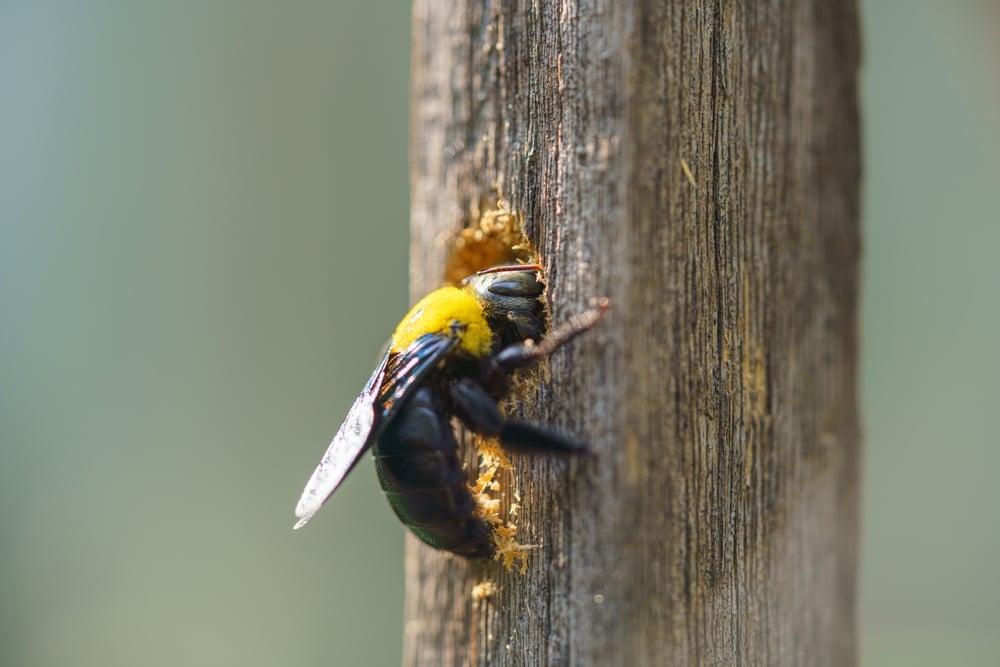
- Carpenter Bee Burrows: Smooth, round holes about half an inch wide and up to six inches deep, often in untreated or damaged wood.
- Yellow Stains and Sawdust Piles: Frass (sawdust) beneath holes and yellowish staining indicate active bee activity.
- Live Carpenter Bees: Solitary by nature, these bees are more robust than honey bees and may hover near their wooden nests.
In some cases, you may also notice increased bee activity around specific areas of your home, particularly during warmer parts of the day. This hovering behavior is often mistaken for aggression, but it is typically a sign that bees are guarding nearby nesting sites.
How Pros Address Recurring Carpenter Bee Infestations
Because carpenter bees are solitary, infestations can go unnoticed while they burrow into your home. Sprays may temporarily repel them, but bees often dig deeper or return, and misidentification can lead to harming essential honey bees.
Professional treatment includes identifying and addressing entry points, treating active tunnels, and helping prevent future infestations through targeted solutions. This comprehensive approach is key to breaking the cycle of repeat activity year after year.
Get the Upper Hand on Carpenter Bees this Spring
Taking early action can make a significant difference in limiting damage and avoiding more extensive repairs later. With professional support, you can confidently protect your home and enjoy the spring season without the worry of ongoing pest activity.
Whether it’s a recurring infestation or your first encounter with carpenter bees, Advantage Termite and Pest Control can help. Our Integrated Pest Management program doesn’t just provide temporary relief; it addresses the root of the problem to prevent future activity.
Protect your home from carpenter bees this season. Contact Advantage Termite and Pest Control to ensure safe, effective, and lasting results.