The most harmless pests are often the most challenging to get rid of, and Indian meal moths are no exception. An Indian meal moth infestation can brew quickly without anyone in your home noticing until it’s too late. Getting rid of Indian meal moths can prove an even greater challenge, as recurring infestations are common. These repeat flare-ups can feel impossible to deal with, which is where Advantage Termite and Pest Control comes in.
Here is your guide to understanding indian meal moths, identifying infestation patterns, and how ongoing pest control can protect your home against resurging infestations.
What are Indian Meal Moths?
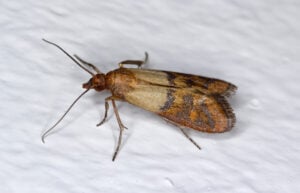
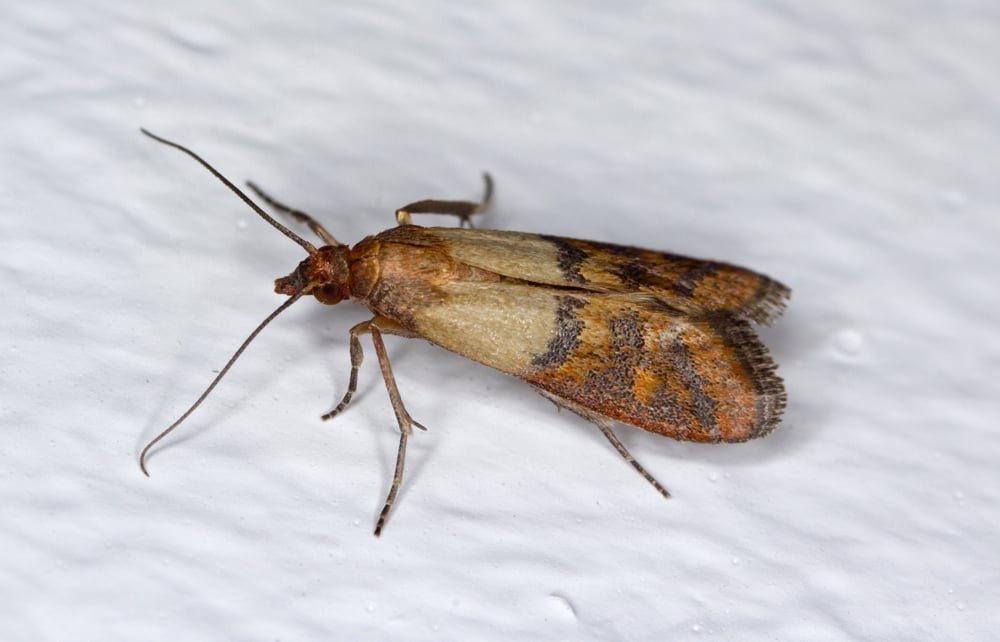
Indian meal moths are small beige or copper-colored moths that like to hide in dark pantries where food is stored. While adult Indian meal moths don’t eat pantry food, their larvae can quickly damage dry foods and other nonperishables often stored in pantries. Though short-lived, with a total lifespan of around two weeks, Indian meal moths reproduce quickly. A single adult female can lay up to 300 eggs, leading to rapid infestations.
Indian meal moth larvae are small pink or cream-colored grubs that are usually harmless if ingested. However, they can cause an allergic reaction or lead to digestive or respiratory irritation if enough larvae or their byproducts are consumed. The biggest inconvenience of Indian meal moth larvae and their byproducts is the unpleasant taste that spoils food as they chew through plastic and cardboard containers to get into your stored food.
Identifying Indian Meal Moth Infestations
Indian meal moths infest dark pantries specifically to reproduce. Because they don’t eat after reaching adulthood, Indian meal moths are seeking a safe, undisturbed environment with plenty of food for their young offspring to feast, molt, and grow.
Indian meal moths are most likely to lay their eggs in untouched foods in the back of the pantry that may have gone forgotten for a long time, such as:
- Cereal, oats, rice, and wheat
- Flour, cornmeal, and baking mixes
- Nuts, legumes, and dried fruit
- Spices, tea, and coffee
- Birdseed and pet food
After Indian meal moths lay their eggs, larvae will hatch within 3-4 days. These larvae molt up to five times on their journey to adulthood, leaving behind a lot of byproducts that damage food and can be identifiable signs of an infestation. These byproducts include:
- Frass: Fecal matter that has a sawdust-like appearance
- Sheddings: Tiny egg shells or shed skins from molting
- Webbing: Silk webbing and cocoons that bind dry foods in clumps
If you discover an entire food product that is heavily clumped together with a lot of webs, larvae, and frass, you are already dealing with a severe infestation that will require professional help to eliminate for good.
How to Stop and Prevent Indian Meal Moth Infestations
Throwing away spoiled food may temporarily alleviate an Indian meal moth infestation, but if you miss even one or two larvae or fertile adult moths, they can quickly repopulate for a whole new flare-up of food-damaging pantry pests. Most over-the-counter treatments will only take care of male Indian meal moths, and even then are unlikely to eliminate them entirely. If you have females already prepared to lay eggs or unmissed males, the infestation will return quickly.
Preventing an Indian meal moth infestation from setting in involves securely storing your food and maintaining a clean kitchen and pantry. Inspect groceries for holes in packaging or signs of Indian meal moths before storing in your pantry. Rather than keeping food in the original packaging, transfer to glass or hard plastic containers with a tight seal so moths and other pantry pests can’t access it.
If you have an Indian meal moth infestation, the only guaranteed method of treatment is through ongoing professional pest control support. At Advantage Termite and Pest Control, we offer ongoing pest control maintenance programs designed to treat infestations and prevent resurgence. Our pest experts can identify the exact type of pantry pest you’re dealing with and use targeted treatments designed to thoroughly cleanse your home of pests. Our Integrated Pest Management (IPM) methods, paired with regular inspections, eliminate existing pest problems while preventing future infestations.
Protect Your Home from Returning Indian Meal Moths with Advantage
If you’re a Kansas City homeowner dealing with indian meal moths or other pantry pests you can’t seem to get rid of completely, contact Advantage Termite and Pest Control to schedule a free inspection and quote. We will find the root of the issue and give you a detailed explanation of our findings and recommended treatment plan. Call us at first sight – we do it right!